Living in Market Harborough: A Town Shaped by the Welland
Living in Market Harborough has long appealed to buyers looking beyond London and the Home Counties, helped by direct trains to the capital and the space and countryside that come with a move to the East Midlands.
For those weighing it against established market towns such as Stamford, however, its appeal as a place to put down roots goes considerably further than the commute.
Period homes close to the historic centre, established family neighbourhoods and villages such as Great Bowden and the Langtons create distinctly different property choices. Add independent shops and cafés, Union Wharf and the Grand Union Canal, a choice of schools and countryside close at hand, and Market Harborough offers the depth of lifestyle that buyers considering a long-term move will want to explore.
A market town in the Welland Valley
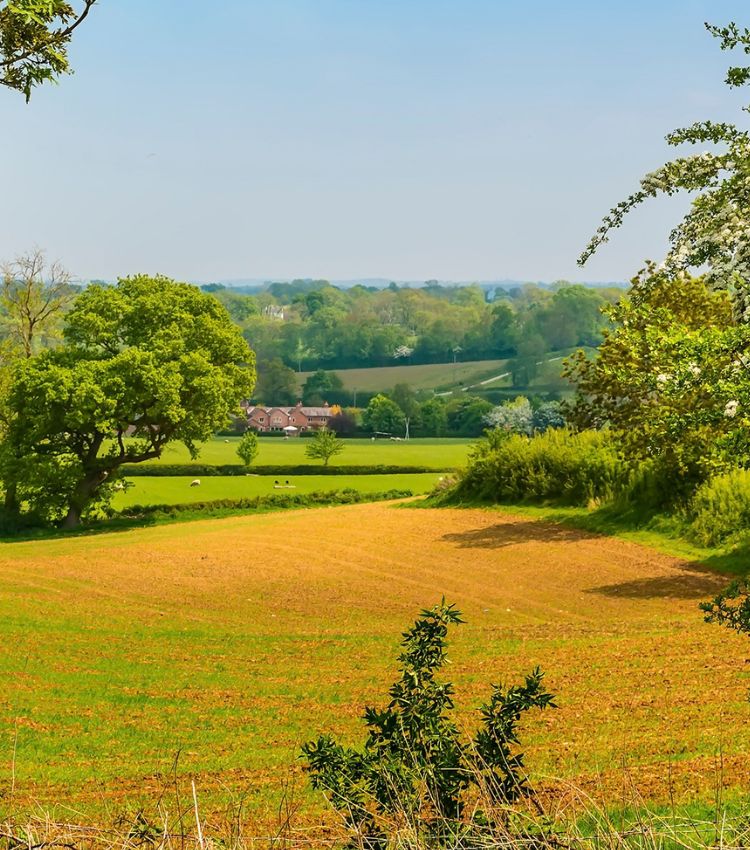
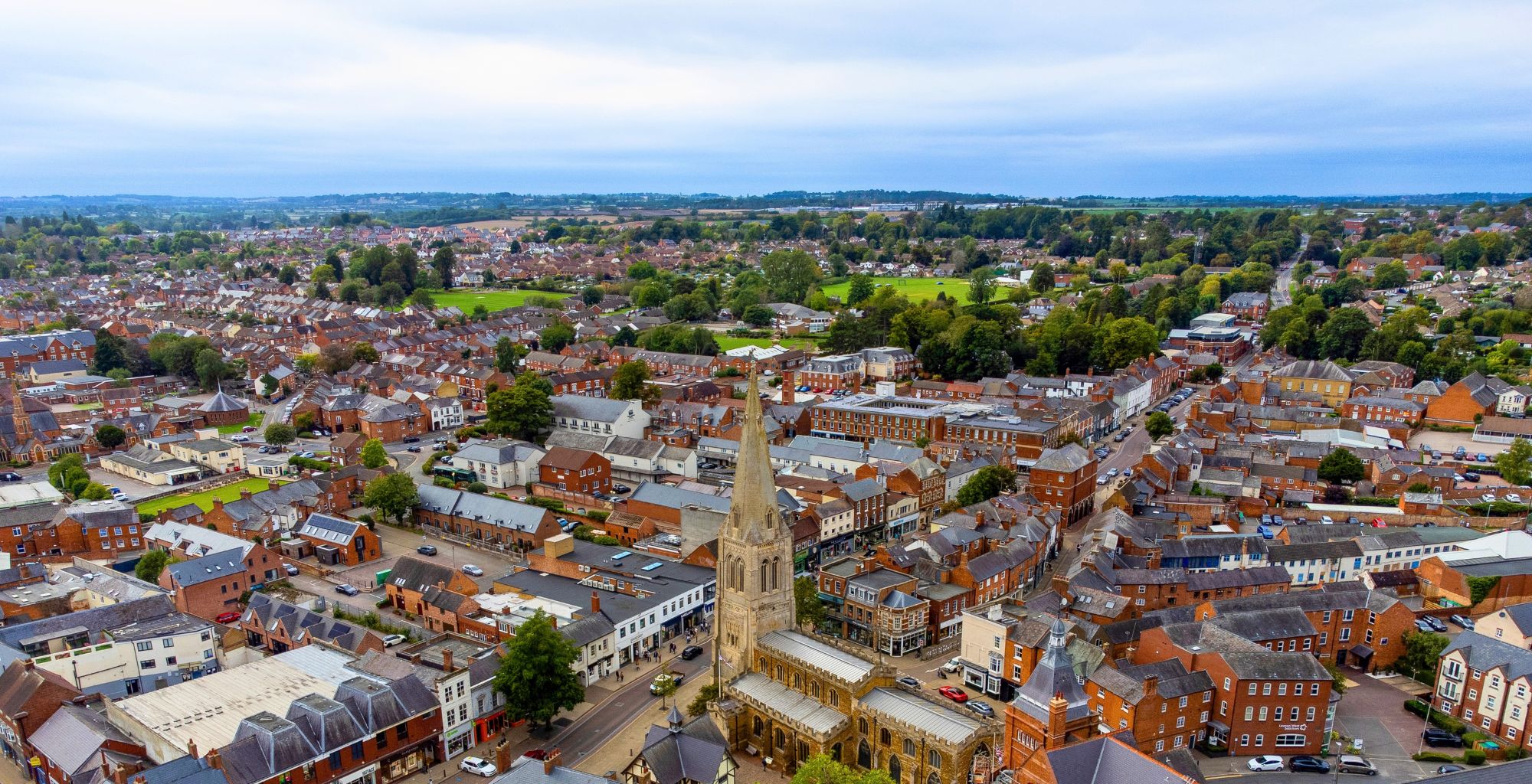
Market Harborough sits in south Leicestershire, in the Welland Valley and close to the Northamptonshire border. Home to 24,779 people at the 2021 Census, its position gives it a natural connection to both counties, with open countryside quickly taking over beyond its residential edges.
Market Harborough’s trading roots stretch back to the late twelfth century, when a market began to develop around what became the town centre.
King John granted a royal market charter in 1204, with the market day changing from Monday to Tuesday in 1221. Today, Harborough Market continues to trade several days a week alongside the town’s independent retailers, cafés and familiar names including Waitrose.
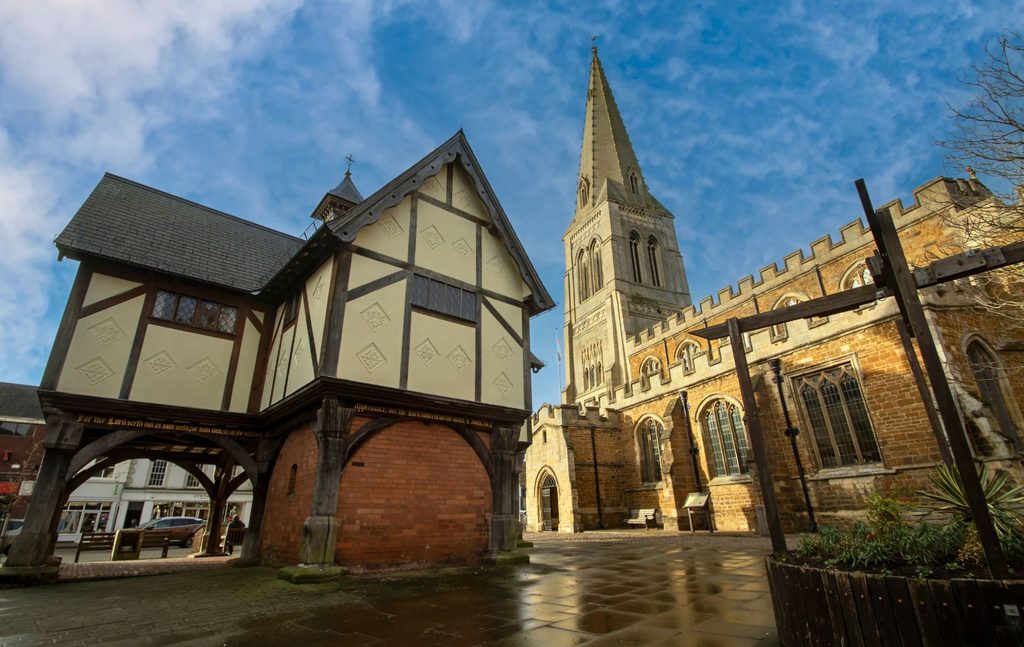
Perhaps the most recognisable building is the Old Grammar School beside St Dionysius Church in the Market Place. Built in 1614, the timber-framed former schoolroom is raised on wooden posts above an open ground floor originally used for market activity. It is a historic landmark rather than the current site of Robert Smyth Academy, which moved to Burnmill Road in 1909, and anchors a historic core where centuries of development remain visible.
The Market Harborough property market: Character and choice
The Market Harborough property market offers considerable variety, reflecting the town’s gradual expansion from its historic core. Victorian terraces and Edwardian houses form part of its older housing stock, with period details and established streetscapes adding to their appeal.
Elsewhere, larger detached and semi-detached houses provide more generous living space and gardens, particularly for family buyers. More recent development has broadened the market further, introducing contemporary homes with modern layouts and specifications.
For buyers, this breadth of housing stock means a search can be shaped as much by the type and age of property they favour as by budget or practical requirements.
Those drawn to original features and established surroundings will find very different options from purchasers prioritising energy efficiency, low maintenance and contemporary design.
Where to live in and around Market Harborough
Choosing where to live in Market Harborough is equally about the lifestyle each part of the area offers.
The historic centre suits homebuyers who value being able to walk to shops, cafés, the market and railway station. Streets around the Market Place and St Dionysius Church place everyday town life close at hand, with period property contributing to the character of the surroundings.
Immediately north, Great Bowden has a distinctly village feel despite its proximity to Market Harborough. Handsome brick houses, older cottages and a recognisable village centre appeal to those wanting a quieter setting without giving up convenient access to the town and station.
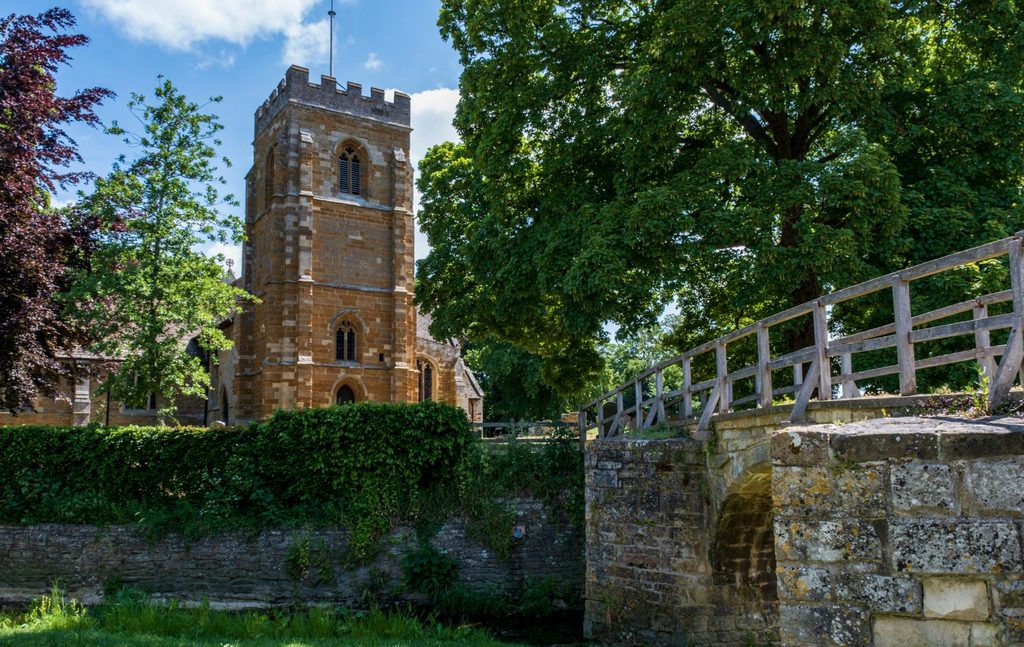
Further out, the Langtons (Church Langton, East Langton, West Langton, Tur Langton and Thorpe Langton) offer a more rural alternative. Stone cottages, larger houses and village communities make this an area to consider for buyers seeking more space and countryside around them.
A similar draw exists north-west of the town at Burton Overy, a conservation village on the road towards Leicester known for its period cottages and quiet, close-knit setting. To the north-east, in the Welland Valley on the B664 towards Uppingham, Medbourne offers the same quiet, close-knit pull, a small village with its own shop and pub and a genuine sense of remove from the working town.
Farndon Fields and other edge-of-town developments offer a different proposition again, combining newer housing with straightforward access to Market Harborough’s amenities.
For relocators unfamiliar with the area, understanding these differences can help narrow a property search considerably.
Life on the water
Union Wharf adds a different character to Market Harborough, away from its historic centre and railway connections.
The wharf sits at the terminus of the Market Harborough Arm of the Grand Union Canal and is now a leisure marina.
It provides places to eat and drink and access to the towpath for walking. The canal extends for around five miles towards Foxton, making it an established part of the town’s leisure offering.
A short drive away, Foxton Locks comprises ten locks arranged in two staircases of five. It is also where the Market Harborough Arm meets the Leicester Line of the Grand Union Canal.
Connectivity: The honest picture
For many homebuyers, living in Market Harborough also has the practical advantage of strong transport links, particularly for households balancing life in the East Midlands with work elsewhere.
Direct rail services connect the station with London St Pancras in around an hour, with Leicester a short journey in the opposite direction. This makes occasional or regular rail commuting feasible without requiring residents to live in a larger urban centre.
By road, the A6 provides connections north towards Leicester and south towards Kettering, while the A427 runs east towards Corby. Westwards, the A4304 leads towards Lutterworth and Junction 20 of the M1, while the A14 to the south provides wider connections across the Midlands and towards Cambridgeshire.
For commuters, the location of an individual property deserves consideration alongside the headline rail service. Living within walking distance of the station can create a markedly different routine from choosing one of the outlying villages where the first part of the commute is likely to be by car.
Schools in Market Harborough
Market Harborough has a range of schooling within the town and surrounding area, an important consideration for families planning a move.
The principal state secondary schools include Robert Smyth Academy, which caters for pupils aged 11 to 18, and Welland Park Academy for ages 11 to 16. There are also primary schools within Market Harborough and neighbouring villages.
School admission arrangements and catchment boundaries can change, so families considering a particular address should confirm the current position directly with the relevant school and Leicestershire County Council before committing to a purchase.
Living in Market Harborough: Help finding the right home
For buyers considering living in Market Harborough, choosing the right location is likely to depend as much on lifestyle as the property itself. Proximity to the station, schools, town centre and countryside can all shape where a search is focused.
For those relocating from London, the Home Counties or elsewhere in the UK, detailed local knowledge can help identify the streets, neighbourhoods and surrounding villages most closely aligned with their requirements.
Ashley Banfield, Garrington’s Regional Partner for the East Midlands, works across Leicestershire and the wider region, helping buyers identify and acquire homes that match both their property requirements and preferred way of life. If you’re considering moving to Market Harborough, Ashley would be pleased to discuss your search and provide an informed view of the local market.
Please get in touch.